
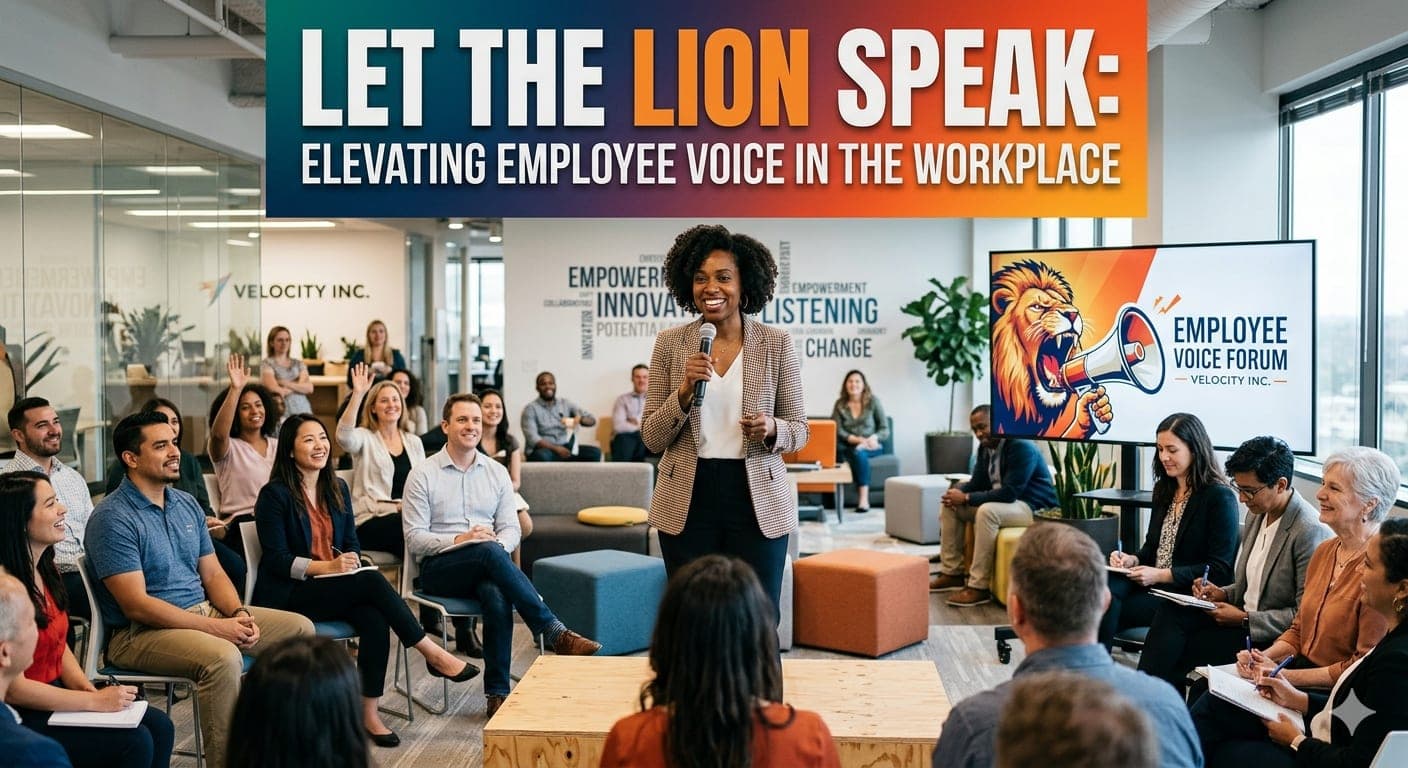
Let the Lion Speak: Elevating Employee Voice in the Workplace
By Dr. Olufemi Ogunlowo
"Until the lion learns to write, every story will glorify the hunter." - Zimbabwean Proverb
History is often written by the powerful, not the silent. In organisations, this ancient truth holds steady. Leadership narratives, strategic decisions, and workplace policies tend to be crafted and recounted by those at the top, while the voices of the frontline - the real lions of the workforce - remain underrepresented, unheard, or misunderstood.
The Zimbabwean proverb calls for a shift: to let the lion tell its own story. In today's business environment, where agility, engagement, and innovation are the currency of survival, organisations can no longer afford to operate with a muted workforce. Elevating employee voice is not just a moral imperative; it is a strategic necessity.
Employee voice refers to the ways in which employees communicate their views, offer suggestions, raise concerns, and influence decisions. It is the bedrock of inclusion, innovation, and trust. Companies that systematically listen to, and act on, employee feedback outperform their competitors in retention, reputation, and results.
Yet in many Nigerian organisations, employee voice remains stifled. Cultural norms of deference to authority, fear of reprisal, and hierarchical management styles combine to create workplaces where speaking up is rare, and being heard is even rarer. Feedback mechanisms, where they exist, are often tokenistic. Exit interviews are seen as mere formalities. Internal surveys gather dust, unanalysed and unused.
This silence is costly. It prevents the early detection of risks, from customer dissatisfaction to compliance breaches. It stifles innovation, as good ideas die in isolation. And it erodes trust, driving disengagement and attrition.
By contrast, organisations that foster employee voice unlock a wealth of insight. Frontline workers know where operational inefficiencies lurk. Customer service agents hear unmet needs directly. Junior staff often bring fresh perspectives unclouded by legacy thinking. When organisations create structures that allow these voices to be heard, discussed, and acted upon, they gain a strategic advantage.
Building a culture of voice starts with leadership. Leaders must not only invite feedback - they must actively demonstrate that it is safe and welcome. This means visibly appreciating input, responding constructively to criticism, and making changes where warranted. Saying "my door is open" is not enough if the first employee who uses it is punished or sidelined.
Second, organisations must design structured channels for voice. These may include regular employee surveys, anonymous feedback platforms, open town hall meetings, and robust grievance mechanisms. But more importantly, these channels must lead to real action. Feedback without follow-up breeds cynicism faster than silence.
Third, managers must be trained as facilitators, not gatekeepers. Too often, middle management acts as a buffer - filtering out difficult messages from reaching senior leadership. Instead, managers should be taught to escalate concerns appropriately, celebrate employee contributions, and resolve conflicts fairly.
Fourth, organisations should leverage technology to democratise voice. Digital platforms can make feedback easier, faster, and more inclusive - especially for remote, hybrid, or distributed teams. Apps that allow pulse surveys, suggestion boxes, and virtual town halls create new avenues for participation beyond traditional meetings.
Employee resource groups (ERGs) and affinity networks also offer powerful platforms for voice, particularly for underrepresented groups. In many global companies, ERGs for women, ethnic minorities, and other minority groups have driven meaningful change in policies and practices. Nigerian organisations should consider how similar models could be adapted to local contexts.
Exit interviews, often an afterthought, must be reimagined as strategic learning opportunities. Departing employees often speak more candidly than those who stay. By conducting structured, confidential, and well-analysed exit interviews, organisations can spot cultural red flags, managerial weaknesses, and systemic barriers before they escalate.
Importantly, voice must be protected. Whistleblower protections should not be limited to major compliance issues like fraud or harassment. Employees must feel safe raising concerns about operational inefficiencies, managerial misconduct, or unethical behaviour without fear of retaliation.
There are encouraging signs. In Nigeria's banking sector, some institutions now conduct quarterly anonymous surveys to capture employee sentiment. In the tech ecosystem, startups are experimenting with open "Ask Me Anything" sessions between CEOs and staff. Professional services firms increasingly include employee feedback scores in manager performance evaluations. These are promising steps - but they must become the norm, not the exception.
When organisations silence employee voice, they silence their own capacity to learn, adapt, and grow. They risk living in echo chambers, where only favourable news travels upwards, while problems fester unseen.
The proverb reminds us that until the lion learns to write, the hunter's version prevails. In the workplace, unless employees are empowered to tell their own stories, share their realities, and influence their futures, the official narrative will always be incomplete - and ultimately unsustainable.
Elevating employee voice is not about abdicating leadership. It is about enriching it. It is about recognising that wisdom does not only reside in the boardroom, but also on the factory floor, in the call centre cubicle, and in the home office. It is about listening to those who live the company's mission daily, not just those who strategise about it quarterly.
In a rapidly changing world, organisations that hear many voices will see more opportunities, catch risks earlier, innovate faster, and build deeper loyalty. Those that silence or ignore employee voice will find themselves blindsided - by crises they could have prevented and by talent they could not keep.
The lion is ready to write. The question is: will the organisation hand it the pen?
Dr. Olufemi Ogunlowo is CEO of Strategic Outsourcing Limited and writes on employee engagement, organisational health, and leadership transformation for BusinessDay.